“Mom said, ‘Remember, when you start something, you need to finish it.'”
For years, Fatima Sazo began every month the same way. She collected her paycheck from Esperanza Juvenil, set aside a portion, and pictured the house she would one day build for her mother.
“When I started working here, it was like a dream,” Fatima says. “I wanted my mom to have a good house, and every month I remembered that, and I saved the money.”
In January 2024, she broke ground. Twelve months later, the house was finished, with a proper kitchen, a terrace, and bedrooms for her mother and two sisters.
“She said, ‘Fatima, I never imagined we would live in this house,'” Fatima recalls. “My mom is very happy. She lives well now.”
For Fatima, 26, who today serves as Esperanza Juvenil’s International Fundraising Coordinator, the house is a measure of how far her family has come, and a story that began with a 10-year-old girl begging her mother to let her leave home.
Fatima grew up in Santo Domingo Xenacoj, a town about two hours from Guatemala City, with her mom Maria, two sisters Paola and Sonia, and a brother, Luis. Their father left when she was three. “He decided to build a new life with another woman, without taking responsibility for us,” she says. “My mother was left alone, raising four children.”
Her mother, Maria, had never had the chance to study and had no stable income. She made tortillas, cleaned houses, and even cleaned the streets “just to earn money and provide food for us,” Fatima says. “I remember she used to say she could probably only support us until sixth grade, because our situation was very hard.”
Then, in 2009, an uncle told Maria about Esperanza Juvenil, a residential program in Guatemala City offering scholarships and academic support. Nine-year-old Fatima was listening. “I said to myself, this is good, and I want to go,” she remembers.
Maria refused at first; the city was dangerous and her daughter so young. “But my insistence was so much,” Fatima says. “Every day it was, ‘Mom, please.'” Maria finally agreed, and a week after applying, Fatima had a scholarship. She moved to the residence in 2010, at age 10. “From that year, my life really changed. Completely.”
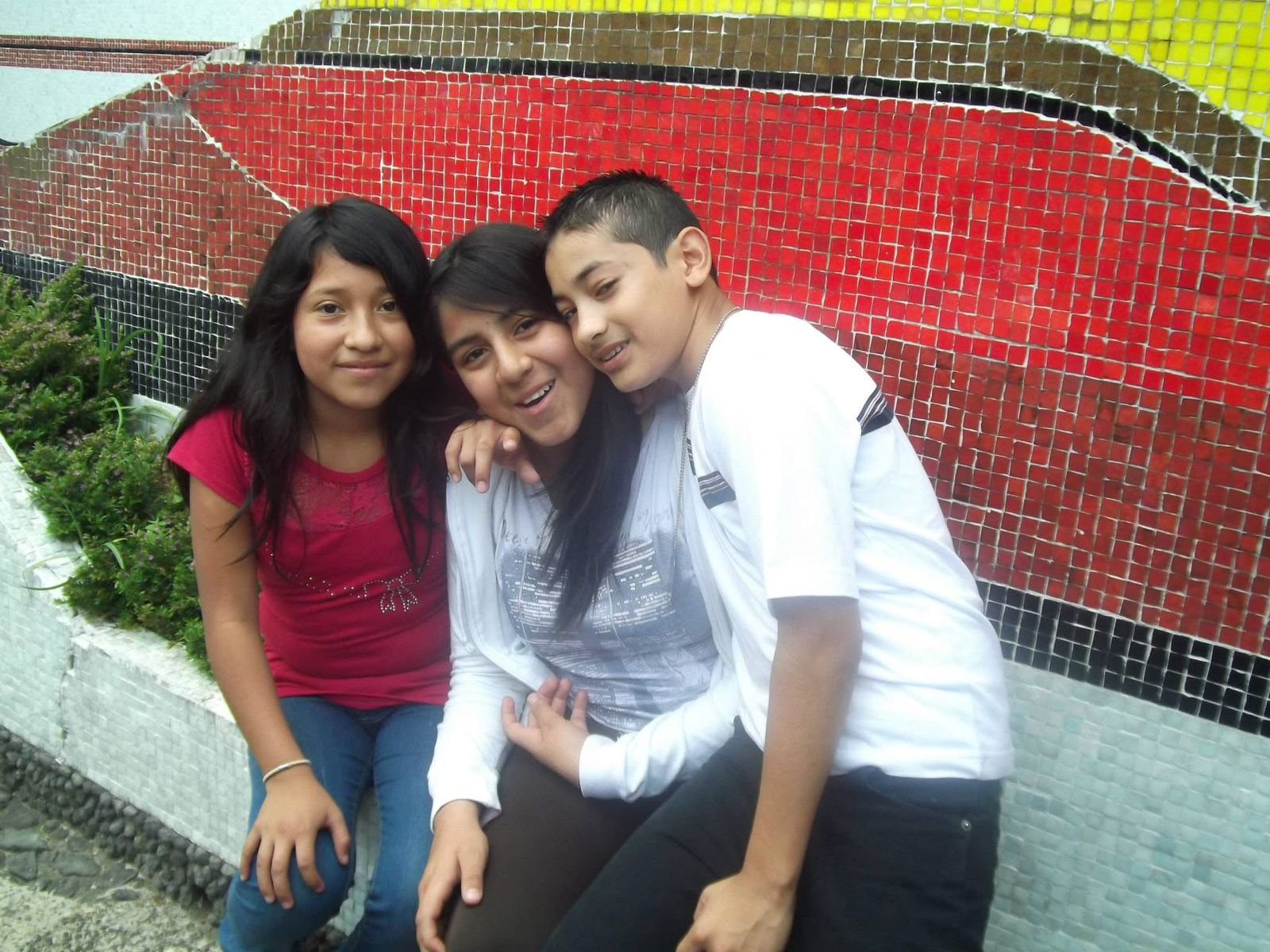
Fatima (left) and two friends from Esperanza Juvenil, age 12.
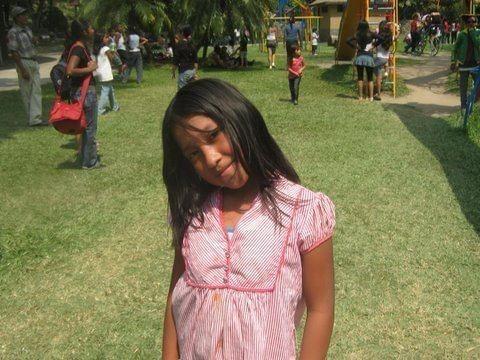
Fatima, age 10.
Neither Fatima nor her mother had ever been to Guatemala City. They made the trip carrying nothing but a paper with the address. “Everything was new for us,” Fatima says. When they finally found the residence, “my mom said, ‘Look, the house is very beautiful.'”
The excitement carried Fatima through her first month. Then homesickness hit. She called home in tears: “Mom, please come back for me. I need you.” Maria’s answer stayed with her. “She said, ‘Remember, when you start something, you need to finish it.'” Fatima took a calendar and crossed off the days, until, somewhere along the way, she forgot the calendar entirely.
Life got easier when her older sister Paola joined Esperanza Juvenil a year later. “When I wanted a hug, she was here,” Fatima says. “When I had a problem, she talked with me. Or we cried together.”
Fatima loved natural sciences and found friendship easy among girls whose lives mirrored her own. “The history of our lives is the same,” she says. The program also taught her to give back early. At 18, she and two friends spent every Sunday visiting hospital patients who had no one. “We only listened to them and motivated them,” she says. “They told us their stories, and they would say, ‘You are strong.’ And we would say, ‘You too.'”
In 2019, Fatima began working at Esperanza Juvenil as a receptionist while studying communication and public image at university, with evening classes until 10 p.m. Executive Director Lucas Pinzon made it possible. “I would say, ‘Lucas, please, can you give me one hour? I have an exam today.’ And he would say, ‘Okay, no worries.’
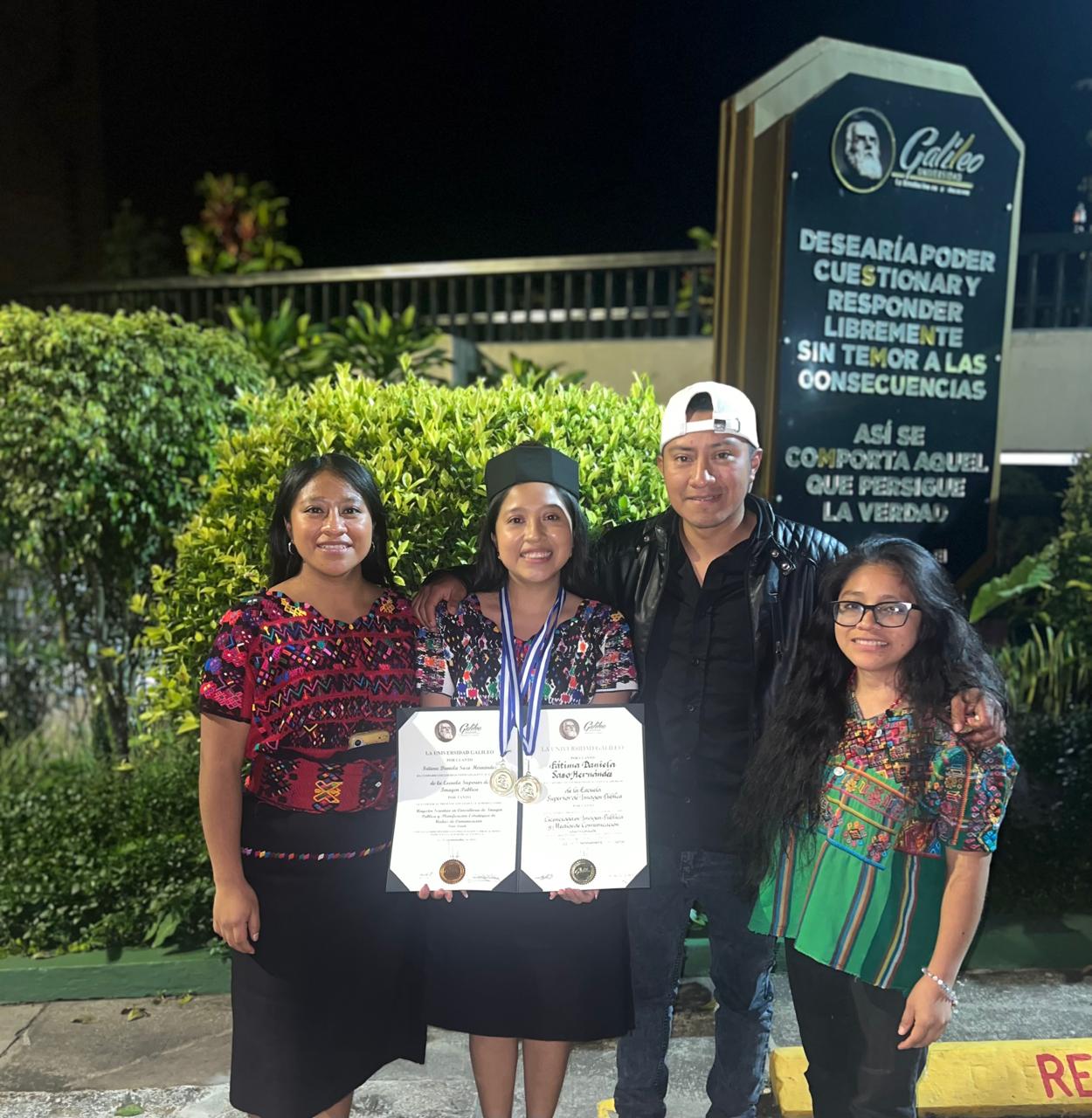
Fatima and her siblings.
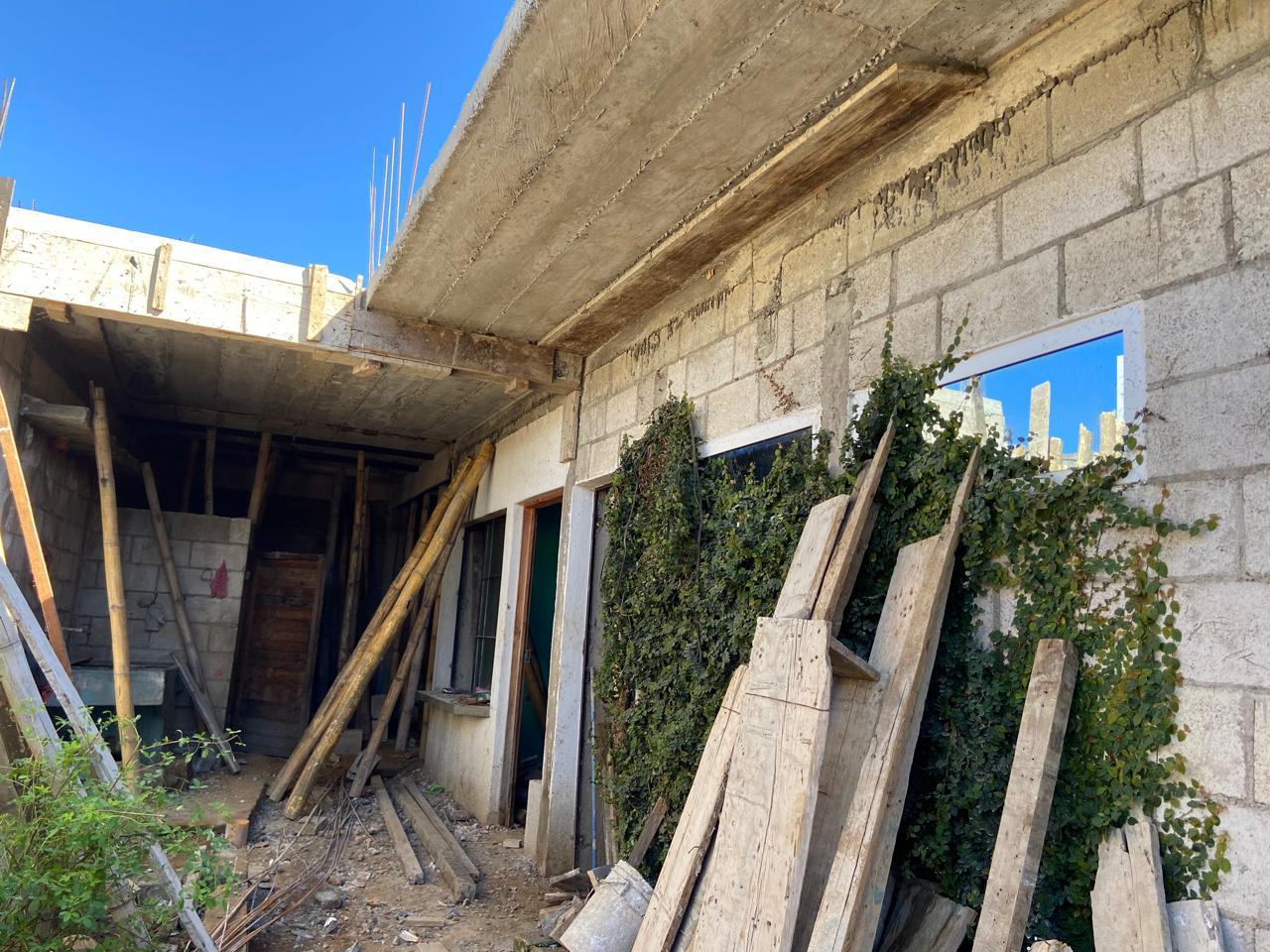
Under construction: the house Fatima built for her mom.
“They changed our lives and gave us so many opportunities. I can only say thank you, because I have been able to accomplish things I never imagined.”
She moved up through the fundraising departments to her current international role. Lucas remained a constant. “He’s more than a boss,” she says. “I talk with him about everything. I think he’s like a father for me, and for other children too.”
Today, all four Sazo siblings are working professionals: Paola is a psychologist, and Sonia and Luis are both nurses. “The process was difficult, but now we have the results of our perseverance and discipline,” Fatima says. “My mom is very proud of us, and we are very proud of her.”
Now Fatima is working to open that same door for others. On July 4, she flies to California for donor meetings and events supporting Esperanza Juvenil’s biggest goal yet: opening two new student houses.
“They changed our lives and gave us so many opportunities. I can only say thank you, because I have been able to accomplish things I never imagined,” she says. “Guatemala needs more places like Esperanza Juvenil, because there are more children who don’t have opportunities. In the future, I hope to contribute even more.”
The girl who once marked off the days until she could go home now spends hers making sure other children never have to give up on staying.

Fatima with Lucas Pinzon, Executive Director of Esperanza Juvenil.
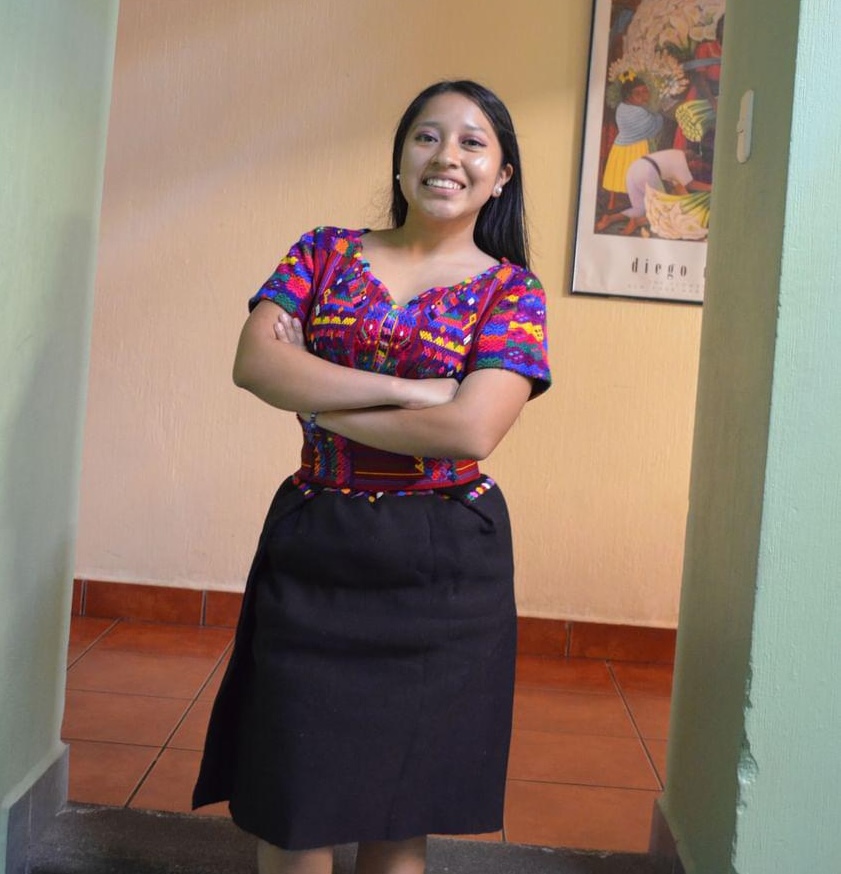
Fatima wearing her traditional huipil top local to her home village, Santo Domingo Xenacoj.