“They wanted us to have the opportunities even if that meant we had to grow up somewhere else.”
When siblings Sophonie and Godson Blaise arrived in Brooklyn in the winter of 2010, the move from Jacmel, Haiti, to New York City was abrupt and disorienting.
Sophonie was six years old and Godson was five. Within weeks, they were enrolled in school.
“I remember that we didn’t speak English,” Sophonie said. “School was really hard.” Godson remembers that period as frustrating and awkward. “We were both in speech therapy,” he said.
“That helped a lot.”
The siblings had traveled to New York with their parents, both educators who ran multiple schools in Haiti. After about a week, their parents returned home, leaving Sophonie and Godson to live with their aunt, uncle, and cousin. Their parents felt that their lives and responsibilities remained firmly rooted in Haiti.
“They wanted us to have the opportunities,” he said, “even if that meant we had to grow up somewhere else.”
“My dad owns three schools,” Godson explained. “They’re each about a thousand students big. He’s a principal. My mom is a teacher, but she also runs a nonprofit.”
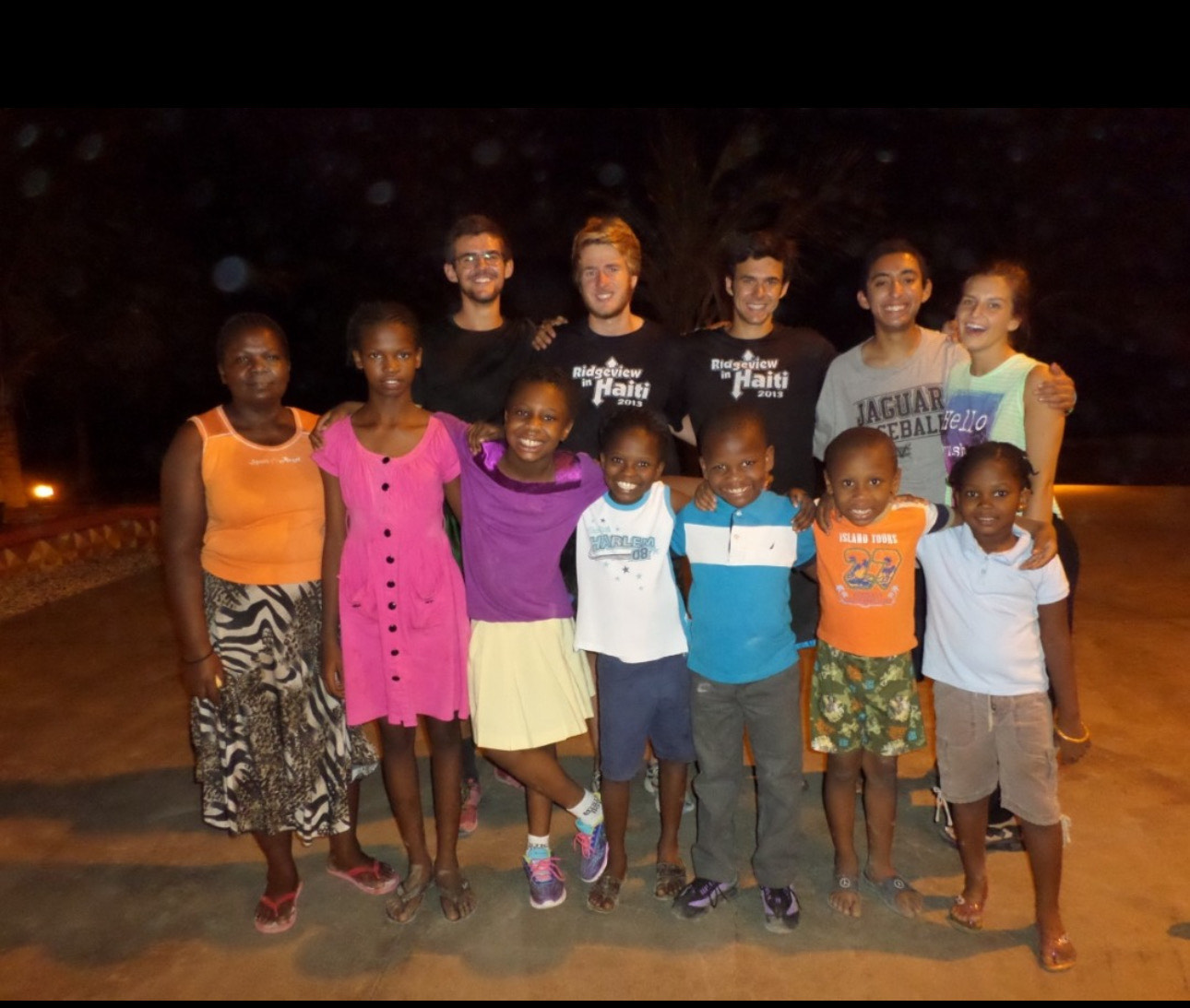
Early days in the Bahamas.
Language was the first major obstacle. At home, their aunt and uncle insisted on speaking only English, accelerating their immersion but deepening early isolation. “I remember being frustrated because I felt like nobody ever understood what I was saying,” Sophonie said. Godson took longer to adjust, remaining in speech therapy through middle school. “It was just another thing on top of school,” he said. “But eventually I did get there.”
The cultural shift extended beyond language. Godson missed the openness of Haiti. “I was used to being in big, open natural environments,” he said. “Coming here felt more confined.”
Sophonie noticed a different contrast. “In the U.S., money matters a lot more,” she said. “Haiti is very community-based. Very family focused.” She remembers her mother cooking in a large pot and sharing food with neighbors as an everyday expression of collective responsibility that felt absent in their new surroundings.
That sense of community would later draw both siblings to the Hope Ignites New York.
Sophonie joined first, entering the residential program as a freshman in high school. Academically motivated and fiercely independent, she had largely navigated middle and high school applications on her own. “We had a lot of autonomy growing up,” she said. “If we wanted to do something, we’d bring the papers to our uncle and he’d sign it.”
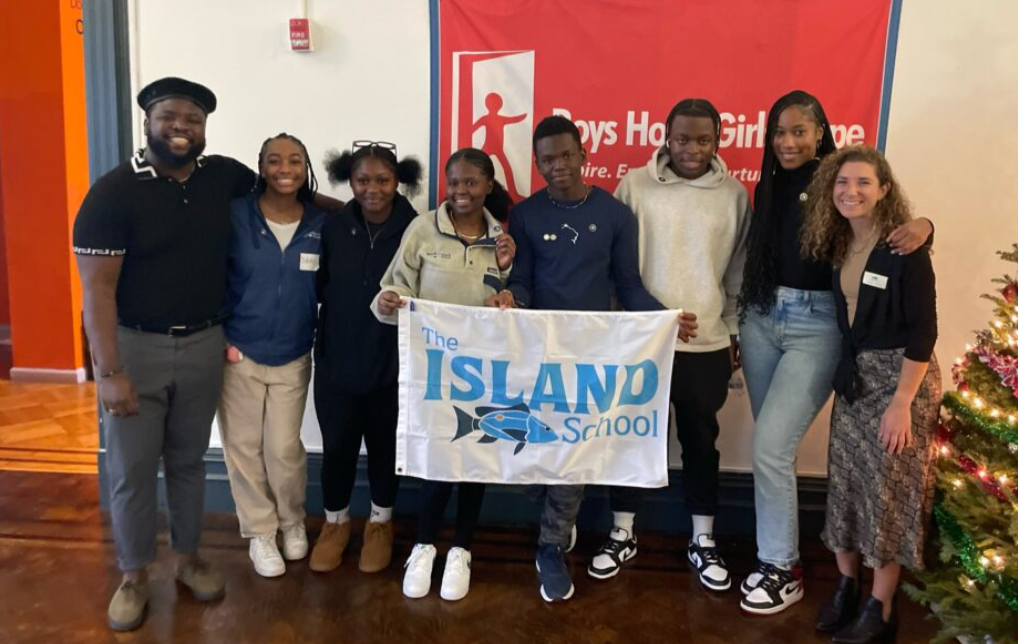
Sophonie and Godson Blaise (middle) holding the flag of The Island School, where they studied abroad in the Bahamas.
“I wanted that same shape to my life. That same positive impact.”
When she learned about the girls’ dorm connected to her high school, the appeal was immediate. “They were talking about sisterhood and community,” she said. “I knew this was what I wanted.”
Godson joined a year later, influenced by what he saw in his sister. “If it’s not broke, don’t fix it,” he said, joking about following his sister’s blueprint for success. More seriously, he added,
“I wanted that same shape to my life. That same positive impact.”
For Sophonie, the residential program provide housing, but it also relieved a responsibility she had quietly carried for years. Before joining, she often attended parent-teacher conferences for her younger brother and cousin, pushing them to take school seriously. Once in the program, dorm parents stepped in. “They told me I needed to just be a high school student,” she said. “That responsibility was lifted off my shoulders.”
Godson felt a similar shift. “Being in this space, it just made it easier to exist,” he said. “I could really focus on my grades, my education, and being involved.”
That focus opened doors. Both siblings participated in a Hope Ignites New York-affiliated study abroad program in the Bahamas, called The Island School, living without technology while studying sustainability.
“That was my first time really looking at the world outside the classroom,” Godson said.
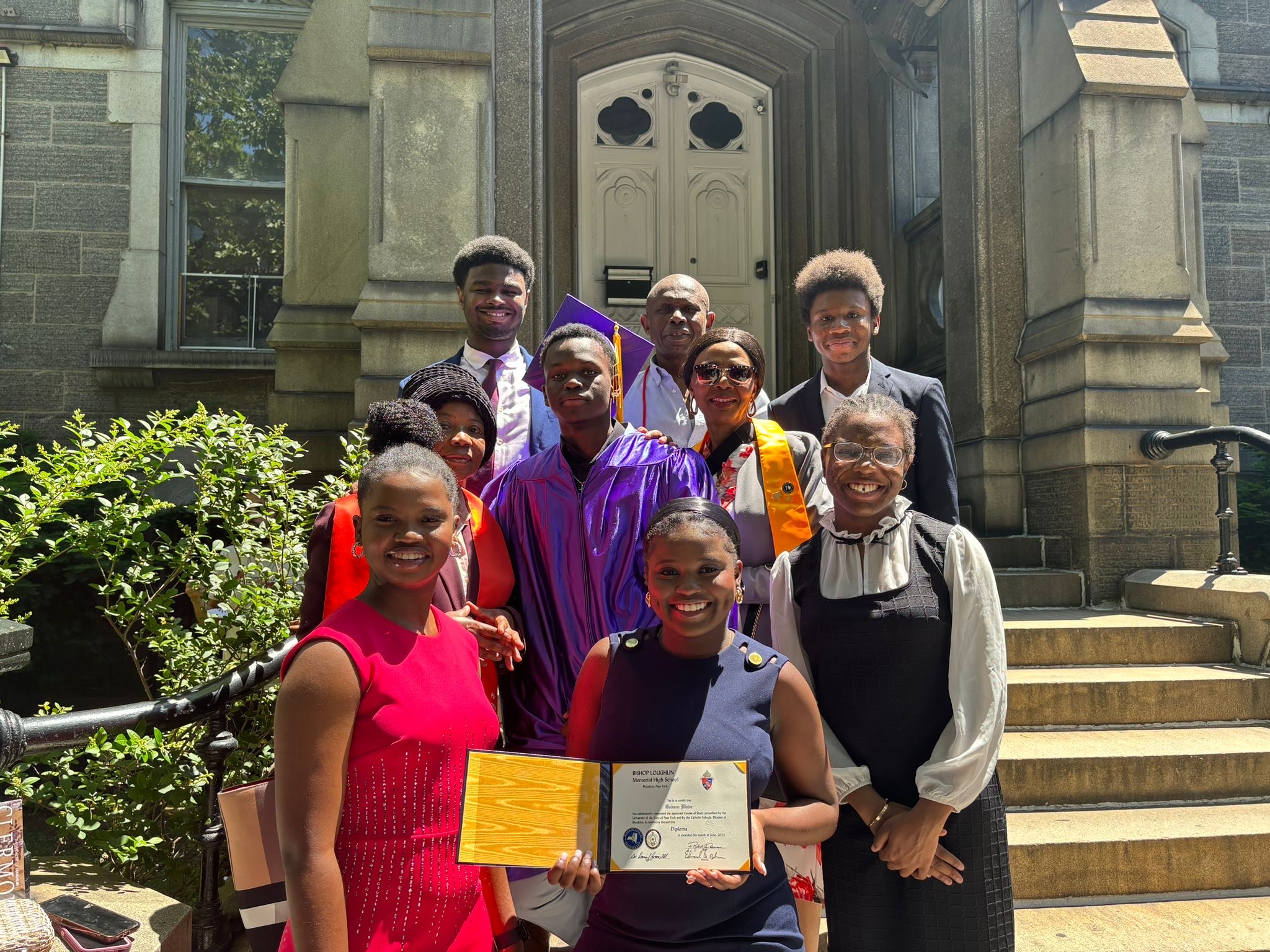
Sophonie (front), and Godson (middle, wearing gown) with their family during a Hope Ignites New York graduation celebration.
Thanks to corporate partnerships through Cristo Rey New York High School, which Sophonie attended, they also explored careers early. Sophonie rotated through work placements at a law firm, a wealth management firm, a nonprofit, and a hospital. “It was when I started working in a hospital that I realized this is something I want to do as a career,” she said. Godson interned through the Insurance Federation of New York, an experience that sparked his interest in finance and asset management.
Today, both attend NYU on full-ride scholarships through the Higher Education Opportunity Program. Sophonie is on the pre-health track, aspiring to become an emergency medicine pediatrician. “I think I am a product of my village,” she said. “Whatever I do, it has to be something where I’m able to give back.”
Godson studies finance and management, hoping to expand access to financial knowledge. “One of the biggest causes of poverty is that people are just unaware of finance,” he said. “I want to help people not just understand it, but build it.”
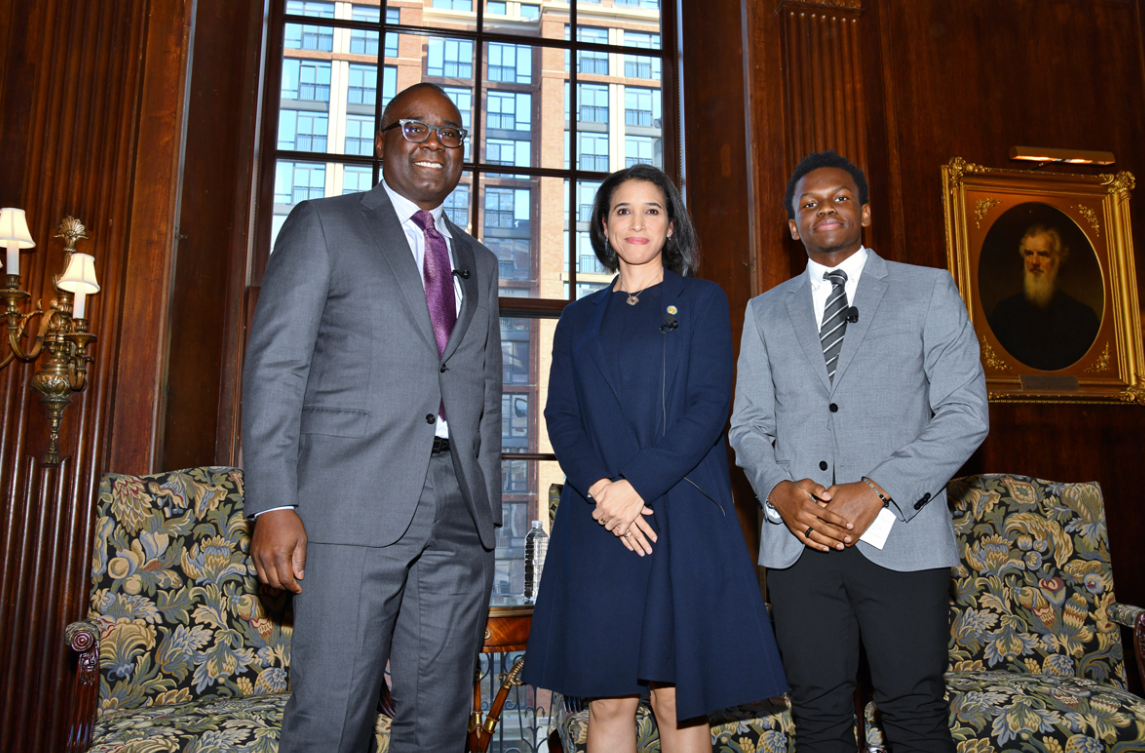
During his 2023 internship with the Insurance Federation of New York, Godson got to meet and speak with the Director of the New York State Department of Financial Services.
Despite distance from Haiti and ongoing political instability that has limited travel, their connection to their roots remains strong. “Language and food,” Sophonie said. “That’s how I stay connected.”
When asked what they would say to a young person considering Hope Ignites, both were direct. “Use every opportunity,” Sophonie said. “Everything I said yes to impacts what I’m doing today.” Godson agreed. “This space is what you make of it,” he said. “If you’re intentional, you’ll reap the benefits.”
For Sophonie and Godson, Hope Ignites helped remove barriers. It gave them the environment they needed so they could focus, grow, and work towards the futures they dreamed of.