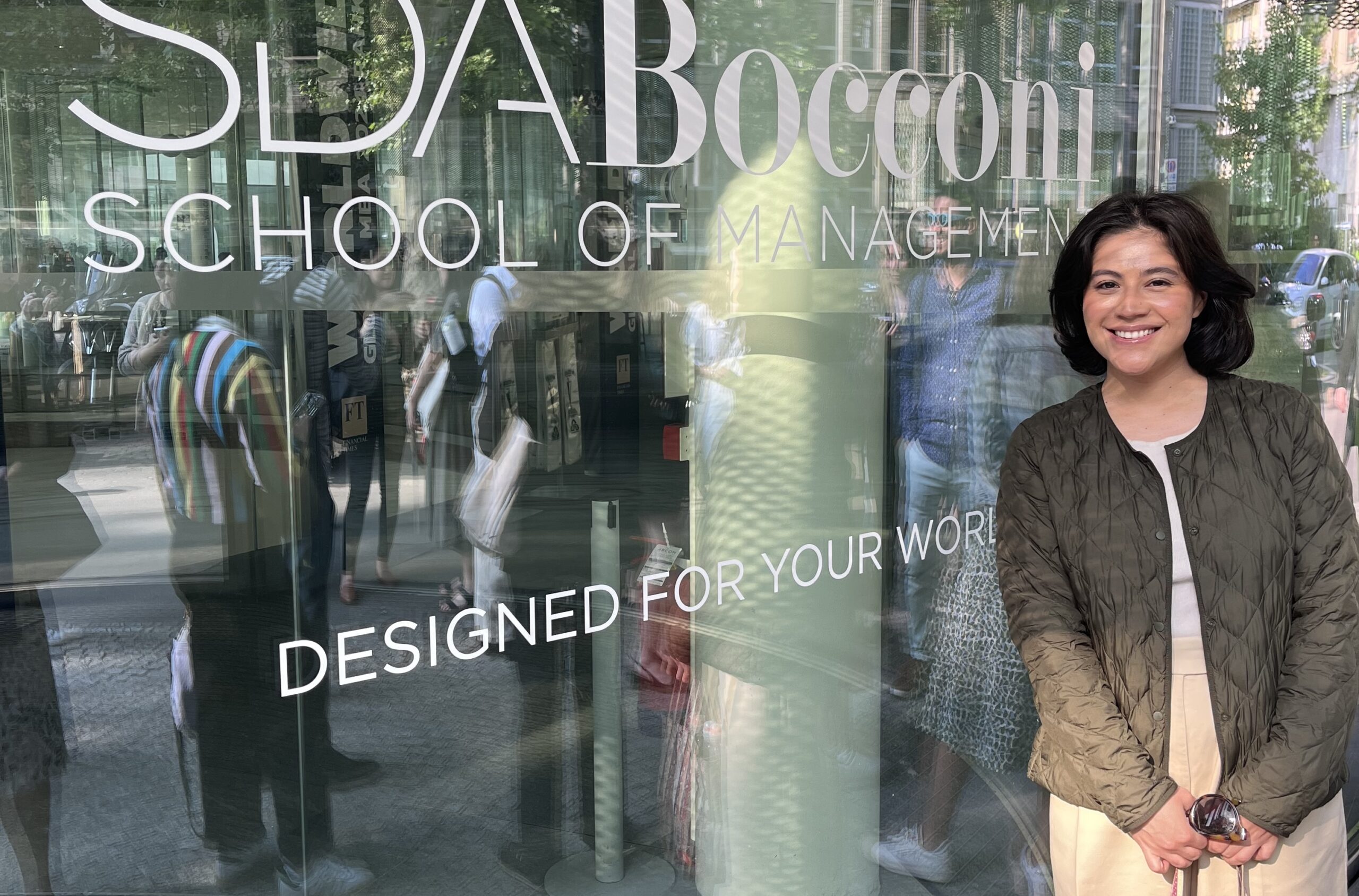
“I was relieved to have stability. It felt like I could finally be myself.”
When Alejandra Aquino looks back at her childhood, she remembers survival. Born in Guatemala City, she came to the United States at just two years old.
She came with her mother and older brother. By the summer of 2009, when she was 10, the recession had left the family homeless in Los Angeles. For months they lived unsheltered, later moving into the garage of a church friend, and eventually cramming into a one-bedroom apartment with two adults, six kids, and two dogs. Through it all, school became her refuge. “There were times I ran to school barefoot because I didn’t want to be home,” she recalled.
In 2010, when Alejandra was 11, a friend from her mother’s church told them about Boys Hope Girls Hope (now Hope Ignites) Southern California. She applied and was accepted. Moving into the girls’ home gave her something she hadn’t experienced before: stability, consistency, and a community of adults who wanted to see her succeed. For the first time, she had access to therapy and a network beyond her family who guided and supported her with encouragement rather than just discipline. “I was relieved to have stability,” she said. “It felt like I could finally just be myself.”
At Rosary Academy in Fullerton, a private, all-girls Catholic high school, Alejandra thrived. She discovered a love for economics and civics, learning how to research policies and analyze debates. A project during the 2016 presidential election taught her to “follow the money,” evaluate policies based on thorough research, and deepened her interest in business and law. Her teachers encouraged her to volunteer for a local campaign, giving her a first taste of civic engagement.
Around this time, she was also introduced to rugby, a sport that became her outlet. “I got into a fight in eighth grade and got suspended,” she said. “But they said, ‘We need to put you in rugby.’ They worked with me and what I was dealing with—being a child of an immigrant and growing up in a very bad social, economic and physically and emotionally vulnerable childhood.” As a physically demanding sport, rugby was a space where Alejandra could express herself.
With support from Hope Ignites board members, she traveled for tournaments and competed nationally. “Rugby gave me the strength to channel all the chaos of my upbringing into something constructive,” she said.
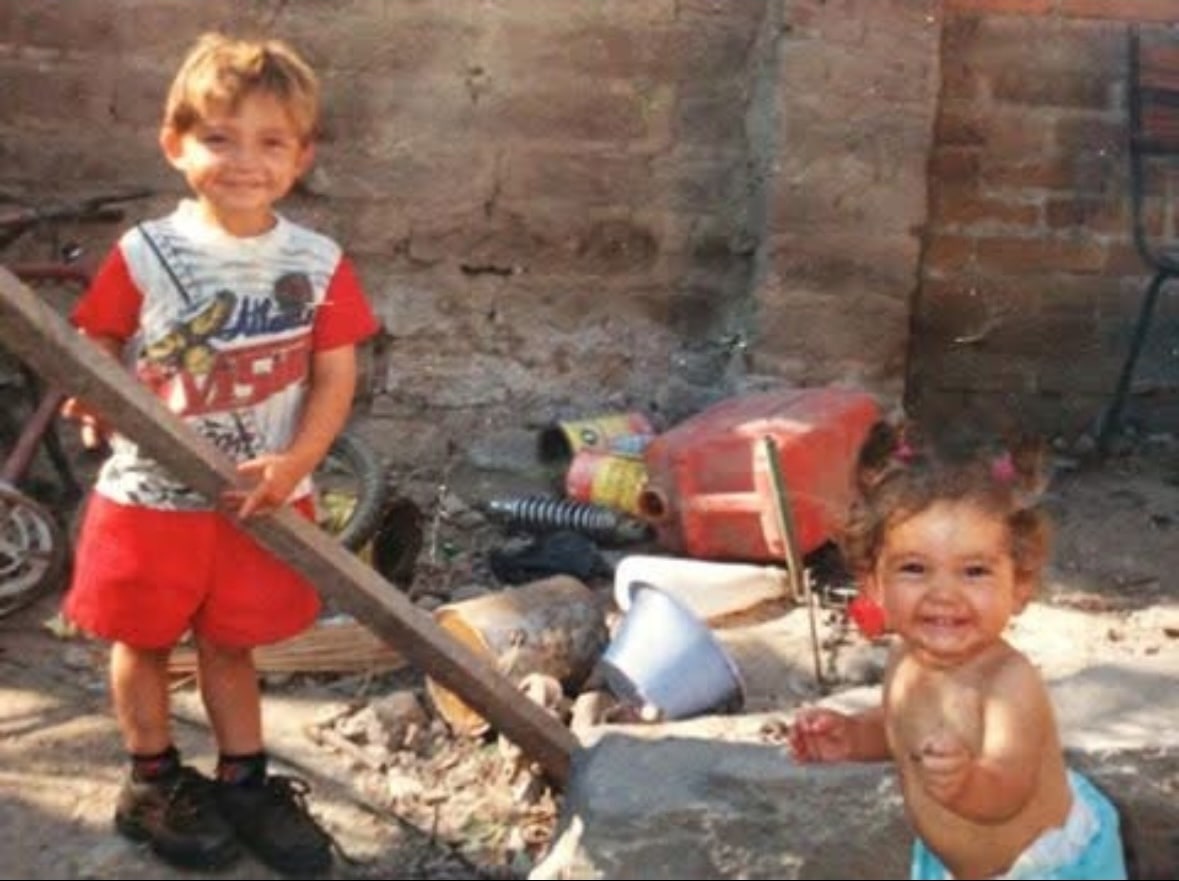
“College was scary. But I did it scared. And that’s the key — you don’t wait for fear to go away. You move forward anyway.”
Even as Alejandra found independence, family life remained turbulent. As the oldest daughter, she had long been “parentified,” caring for younger siblings. By high school, she was also figuring out how to support herself financially.
To pay for school dances, uniforms, prom dresses, and other costs her family couldn’t cover, she baked and sold cupcakes and cookies in the neighborhood. She also helped her mother run a mobile troquita (snack and food stand) while watching her stepfather struggle in the upholstery business without legal protection or knowledge of how to navigate the system. These experiences inspired her to pursue a path that could one day equip her to help immigrant families like her own.
That determination carried her across the country to Marist University in Poughkeepsie, New York, where she earned a B.B.A. in Business Administration (concentration in International Business) with a double minor in Women’s Studies and Global Studies, alongside a paralegal certificate. The move was daunting, but she carried a mantra: do it scared. “College was scary,” she said. “But I did it scared. And that’s the key—you don’t wait for fear to go away. You move forward anyway.”

Alejandra supported herself by working three jobs: on campus with the cafeteria catering service, tutoring in local schools, and working overnight shifts at McDonald’s three nights a week while attending school full-time—often sleeping from about 3:30 a.m. to 9:00 a.m.
She pushed through concussions and lingering health effects from a childhood accident (she was hit by a car and spent considerable time in the hospital), building study systems to succeed academically. When family relationships became more difficult, Hope Ignites staff provided notarized letters so she could be recognized as an independent student, allowing her to file her own taxes to show she could meet tuition obligations. During the COVID-19 shutdown, when she had nowhere to go, the program stepped in again with housing support so she could finish her degree.
In 2021, she became the first in her family to graduate college. Today, Alejandra works at Employee Justice Legal Group (EJLG) in Los Angeles as a class action civil litigation paralegal on the plaintiff/employee side (wage & hour / PAGA).
The role has sharpened her long-term ambitions: she’s considering a dual JD/MBA after gaining more business experience and eventually launching a consulting firm to support immigrant- and minority-owned businesses.
Though her days are full, Alejandra stays connected to Hope Ignites Southern California, grateful for the mentors and supporters who believed in her. Asked what advice she’d give to her younger self—or to a young person considering the program—she doesn’t hesitate.
“Do it scared,” she said. “Don’t wait until you feel ready because you may never feel ready. Take the leap anyway. The support is there. The resources are there. And you’ll thank yourself for making the most of it.”